In the world of modern rail systems, efficiency, reliability, and performance are paramount. One of the unsung heroes of rail transport technology is the 6FXA 7059 Traction Motor Rotor Shaft. While passengers often focus on the smoothness of their ride or the speed of the train, it’s the intricate mechanical components that work behind the scenes to ensure safe and efficient operations. It plays a critical role in the function of traction motors, a vital element for powering rail vehicles. In this blog, we’ll explore the importance of this key component and its role in modern rail systems.
What is the 6FXA 7059 Traction Motor Rotor Shaft?
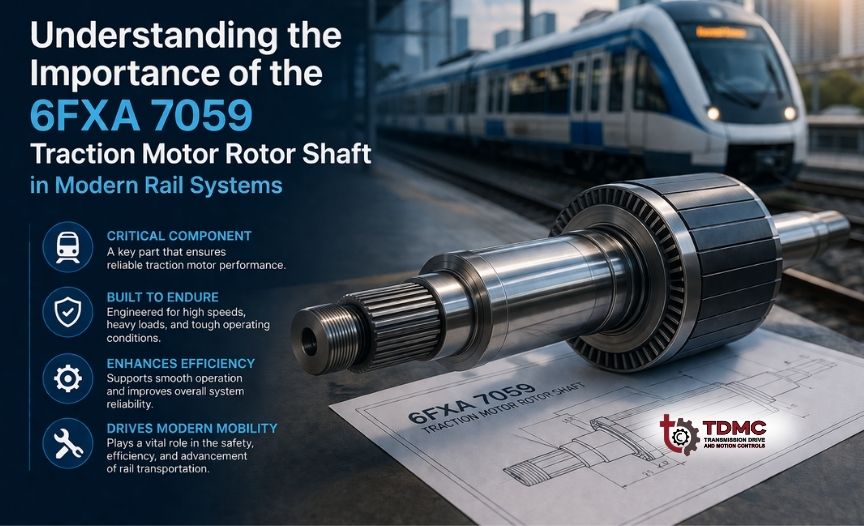
It is a crucial part of the traction motor assembly in electric rail vehicles. The rotor shaft connects the rotor to the rest of the motor system, enabling the motor to generate the rotational force needed to propel the train forward. This component is built to withstand intense mechanical stress while ensuring smooth, reliable operation under a wide range of operating conditions.
It is engineered with precision to deliver high performance, ensuring that trains can run efficiently at both high speeds and in challenging terrain.
Role in Power Transmission
One of the primary functions of the 6FXA 7059 Traction Motor Rotor Shaft is to act as a power conduit from the traction motor to the train’s wheels. When electricity is supplied to the motor, it creates magnetic fields that generate torque. The rotor shaft then transfers this torque to the drive system, enabling the wheels to rotate and move the train. Without this vital connection, the energy generated by the motor wouldn’t be effectively translated into forward motion.
Durability and Reliability
Given the continuous wear and tear on rail vehicles, the 6FXA 7059 Traction Motor Rotor Shaft must be made from materials that ensure longevity and high resistance to fatigue. The rotor shaft is often exposed to extreme forces, including high torque, shock loads, and varying temperatures. Its durability is key to maintaining the smooth and uninterrupted operation of modern rail systems.
Contribution to Energy Efficiency
It also plays a role in energy efficiency. By providing a reliable and stable connection between the motor and the wheels, it helps the traction system operate more effectively, minimizing energy loss. Efficient power transfer leads to reduced energy consumption, ultimately contributing to lower operational costs and better environmental performance of rail systems.
The 6FXA 7059 Traction Motor Rotor Shaft is an essential component of modern rail systems, enabling efficient power transmission, ensuring durability under heavy loads, and contributing to overall energy efficiency. As rail transport continues to evolve, the importance of such components will only grow, supporting the development of faster, more sustainable trains.